Form W-8IMY is an IRS withholding certificate used by certain foreign intermediaries, foreign flow-through entities and certain U.S. branches to certify their status for U.S. tax withholding and reporting purposes. Depending on their status and circumstances, entities such as Qualified Intermediaries (QIs), Nonqualified Intermediaries (NQIs), withholding foreign partnerships and withholding foreign trusts may also need to provide a withholding statement containing information required to determine the appropriate withholding treatment for underlying payees.
In this article, we’ll break down the essentials of a withholding statement and explore the many obstacles associated with W-8IMY and withholding statement management. By understanding these challenges, we aim to highlight the significance of our latest innovation, the Withholding Statement Extractor. While the industry has long pursued standardization of withholding statements, little progress has been made.
What is a W-8IMY Form?
A Form W-8IMY is a crucial document used by foreign intermediaries, flow-through entities, or certain U.S. branches to certify their status for withholding tax purposes. Unlike other Forms W-8 (e.g. W-8BEN, W-8BEN-E, W-8EXP), the W-8IMY is not used to claim a reduction or exemption from withholding tax. Instead, it’s primarily used to document the entity’s status as an intermediary, which may pass through income to its beneficial owners.
This form is vital for ensuring that the correct withholding tax rates are applied to payments made to foreign entities and if required, their underlying beneficial owners. However, managing these forms can be complex, especially when combined with the varying formats of attached withholding statements. Properly handling Forms W-8IMY is essential for maintaining compliance with IRS regulations and avoiding penalties.
W-8IMY & Withholding Statment Management at a Glance
| Question | Quick answer |
|---|---|
| What is Form W-8IMY? | An IRS withholding certificate for certain foreign intermediaries, flow-through entities and certain U.S. branches |
| Who receives it? | Generally, the withholding agent/requester |
| Who may use it? | QIs, NQIs, certain foreign partnerships/trusts and certain U.S. branches, among others |
| Can it require a withholding statement? | Yes, depending on the entity’s status and circumstances |
| What does the withholding statement do? | Provides information needed to allocate payments to applicable payees or withholding rate pools |
Who Needs to Provide Forms W-8IMY?
Foreign intermediaries, flow-through entities, and certain U.S. branches that act as intermediaries in the payment process must complete Forms W-8IMY. This includes entities like foreign partnerships, foreign simple trusts, foreign grantor trusts, and other non-U.S. entities that receive income on behalf of another party.
These entities need to complete and provide a Form W-8IMY to certify their intermediary status and provide documentation for the appropriate withholding tax treatment. By submitting this form, they ensure that the correct amount of withholding tax applies to the income they receive before passing it on to the ultimate beneficial owners. Proper filing is essential to meet IRS requirements and avoid potential issues with tax compliance.
Understanding Withholding Statements
A Withholding Statement is an essential document that often accompanies Forms W-8IMY, depending on the status selected. A withholding statement details the underlying beneficial owners of the income and the corresponding information regarding the allocation of the payment. This statement ensures that the correct withholding rates apply to the income distributed.
A Withholding Statement clearly identifies how the income is allocated among the beneficial owners, and how each may be subject to different tax rates depending on their tax treaty benefits or other relevant factors. Given the lack of a standardized format, these statements can vary significantly, making them challenging to manage and review. Properly handling Withholding Statements is crucial for accurate tax reporting and maintaining compliance with IRS and other regulatory requirements.
What Information is on a Withholding Statement?
Generally, a withholding statement includes several key pieces of information that are crucial for accurate tax reporting and compliance. Here’s what you can expect to find on a typical withholding statement:
- Payee Information: The name, address, and taxpayer identification number (TIN) of each beneficial owner receiving the income, as well as their status as a U.S. or Foreign person and the type of recipient.
- Income Details: A breakdown of the types of income distributed, such as dividends, interest, royalties, or other payments.
- Withholding Rates: The applicable withholding tax rate for each type of income. This is based on the recipient’s country of residence and any relevant tax treaties.
- Allocation of Income: Details on how the income is allocated among the different beneficial owners or account holders.
- Documentation References: References to the W-8IMY forms or other documentation (e.g. documentary evidence, Form W-8 or Form W-9) that support the withholding rates and allocations.
The Issues with Withholding Statements
Withholding statements, while crucial for tax compliance, come with several challenges that can complicate the overall management and accuracy. Here are the main issues associated with Withholding Statements:
- Lack of Standardization: There is no universally mandated format for withholding statements. This has led to a wide variety of formats and variances in how the required information is provided. This lack of standardization makes it difficult to review and extract the information, increasing the likelihood of errors.
- Complex Data Handling: Withholding statements often contain detailed and complex information. This includes multiple income types, different withholding rates, and varied allocations across numerous beneficiaries. Managing this data manually can be time-consuming and prone to mistakes.
- High Error Rates: Due to the complexity and non-standard formats, errors in data entry, calculation, or interpretation are common. These errors can lead to incorrect withholding amounts, resulting in a downstream impact around potential penalties or compliance issues.
- Inconsistent Documentation: The supporting documentation that accompanies withholding statements, such as Forms W-8IMY, may be incomplete or outdated, further complicating the accuracy of the statements and the withholding process.
- Time-Consuming Manual Processes: Reviewing and processing withholding statements manually is not only error-prone but also extremely time-consuming, especially for organizations handling large volumes of forms. This inefficiency can lead to delays in payment, reporting and increased operational costs.
- Difficulty in Compliance: Ensuring compliance with IRS regulations and international tax laws is challenging when dealing with varied and complex withholding statements. Even small errors can result in significant compliance risks, including fines and audits.
These issues underscore the importance of finding effective solutions, such as automation tools, to streamline the processing of withholding statements. Then, in turn, minimize the risks associated with manual handling.

Introducing Our Withholding Statement Solution
To address this industry challenge, Comply Exchange has created a powerful solution that efficiently extracts data from an ever-increasing range of withholding statements. While the industry has long pursued standardization of withholding statements, little progress has been made. That’s why we asked ourselves: why settle for standardization when you can revolutionize?
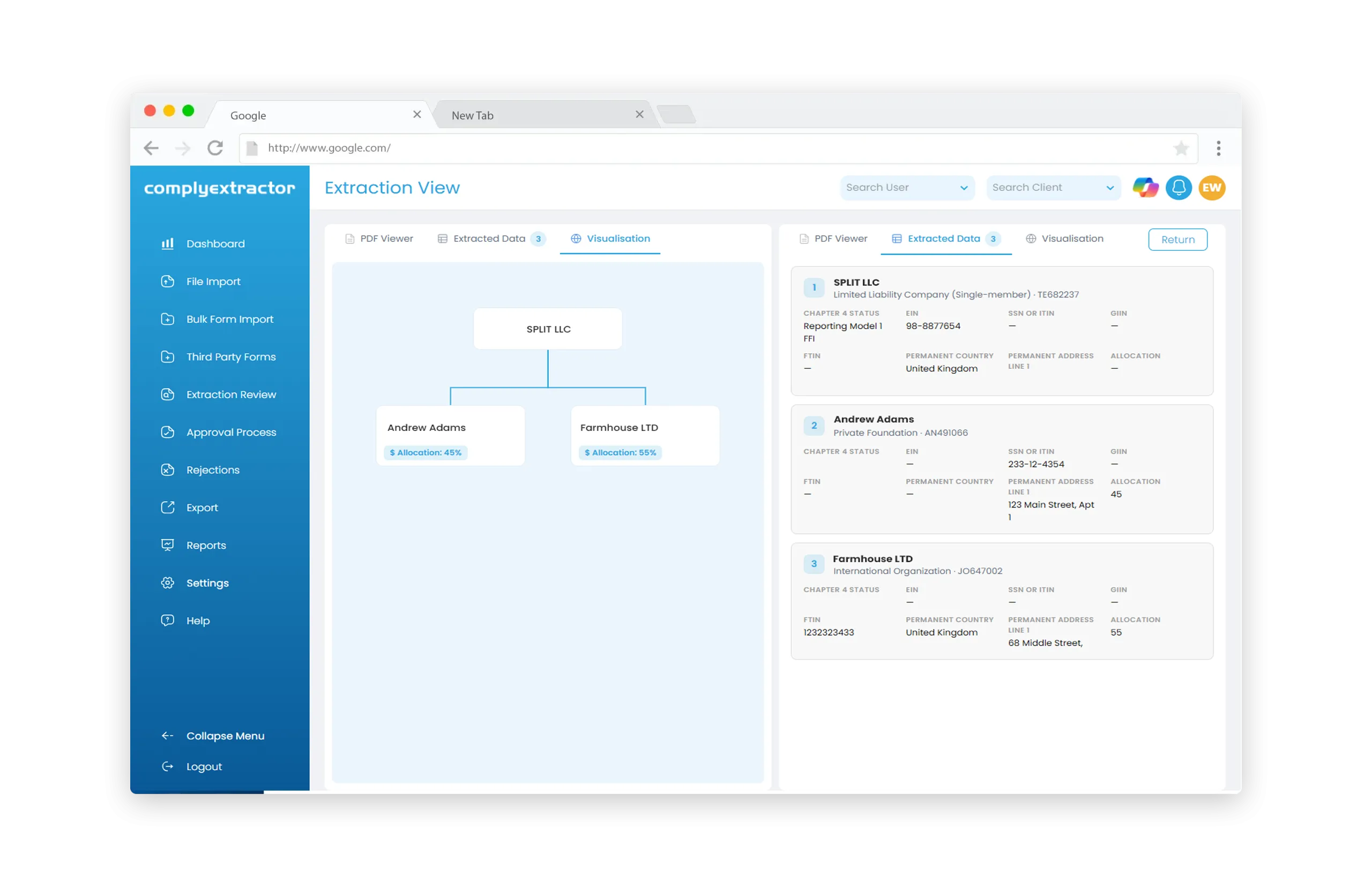
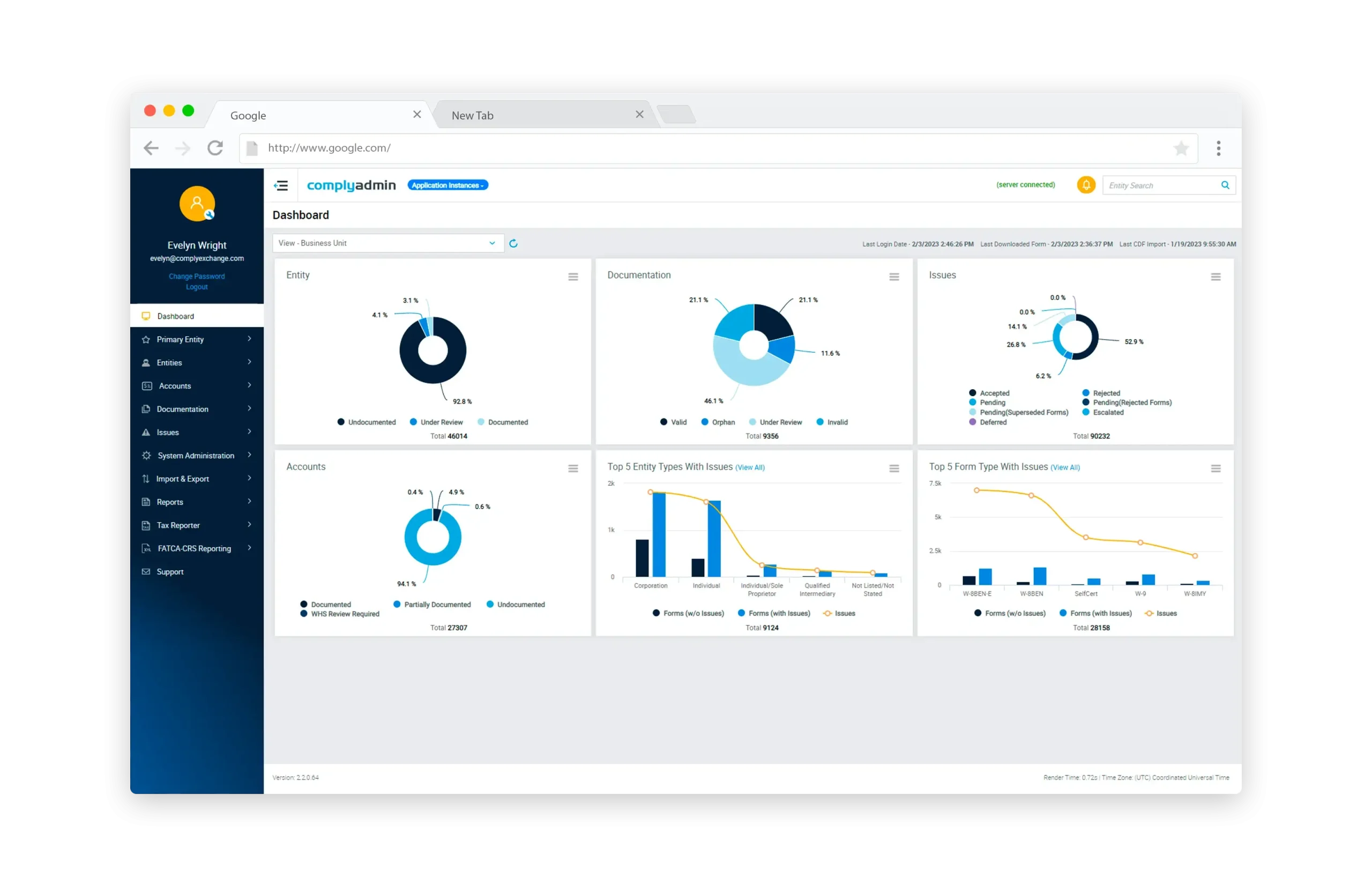
Combined with Comply Admin for robust form validation, the Comply Extractor offers an even more comprehensive and reliable solution. With advanced Microsoft Azure AI that continuously learns and adapts, this integrated approach significantly reduces the burden of lengthy, repetitive tasks, ensuring fast, accurate, and confident data extraction.
Key Features and Benefits of the Withholding Statement Extractor
- Automated W-8IMY Withholding Statement Processing: Efficiently handles the end-to-end processing of Forms W-8IMY, ensuring compliance and accuracy.
- Hybrid Data Extraction: Combines manual input with generative AI processes to extract and manage data seamlessly, avoiding errors and providing a fully tracked management system.
- Time and Cost Savings: Our automated solution can extract the necessary data from any withholding statement in a matter of minutes.
- Enhanced Efficiency in Tax Withholding Processes: No matter what your current process is, our extractor can be seamlessly implemented to ensure no unnecessary stress is added to your current workflow.
- Defined Processes and Procedures for Audit Reference: We provide a comprehensive and transparent audit trail from the beginning, preparing your company for any potential audit.
- Improved Accuracy and Compliance: At the forefront of our product is a rigorously trained AI system that continually learns and reviews the latest IRS regulations and guidance, ensuring all data is compliant.
- Standardized File Format Outputs: Delivers outputs in standardized file formats, significantly enhancing efficiency and accuracy compared to traditional manual processes.
Conclusion
Managing Forms W-8IMY and withholding statements has long been a challenging and time-consuming task. The complexities of non-standardized formats, detailed data handling, and the risk of errors have made compliance a daunting process. However, understanding these documents and their importance in the tax compliance landscape is crucial for avoiding penalties and ensuring accurate reporting.
Our new Withholding Statement solution offers a streamlined, automated solution to these challenges. By efficiently processing and validating data from various withholding statement formats and layouts, this tool not only reduces the burden of manual tasks but also enhances accuracy and compliance. With features like hybrid data extraction and a standardized output format, our solution integrates seamlessly into your existing workflow, saving both time and costs.
We offer personalized demos for the Comply Extractor, so schedule yours today. We tailor our demos to your business’s specific needs to save you time in the process. If you need further information about the product, visit the Comply Extractor page or download our one-pager below.
Form W-8IMY (Rev. October 2021)
Form W-8IMY (Rev. October 2021) Instructions
Frequently Asked Questions
Form W-8IMY is generally used by certain foreign intermediaries, flow-through entities and certain U.S. branches, whereas Form W-8BEN-E is generally used by foreign entities to certify their own beneficial-owner status for U.S. tax withholding and reporting purposes.
A withholding statement may be required with Form W-8IMY depending on the entity’s status and the payment circumstances. It provides information needed by the withholding agent to allocate payments to applicable payees, withholding rate pools or other permitted pools and apply the appropriate withholding treatment.
Generally, Form W-8IMY is provided to the withholding agent or other requester rather than filed directly with the IRS. The withholding agent uses the form, together with any required withholding statement and supporting documentation, to determine the appropriate U.S. tax withholding and reporting treatment.has context menu