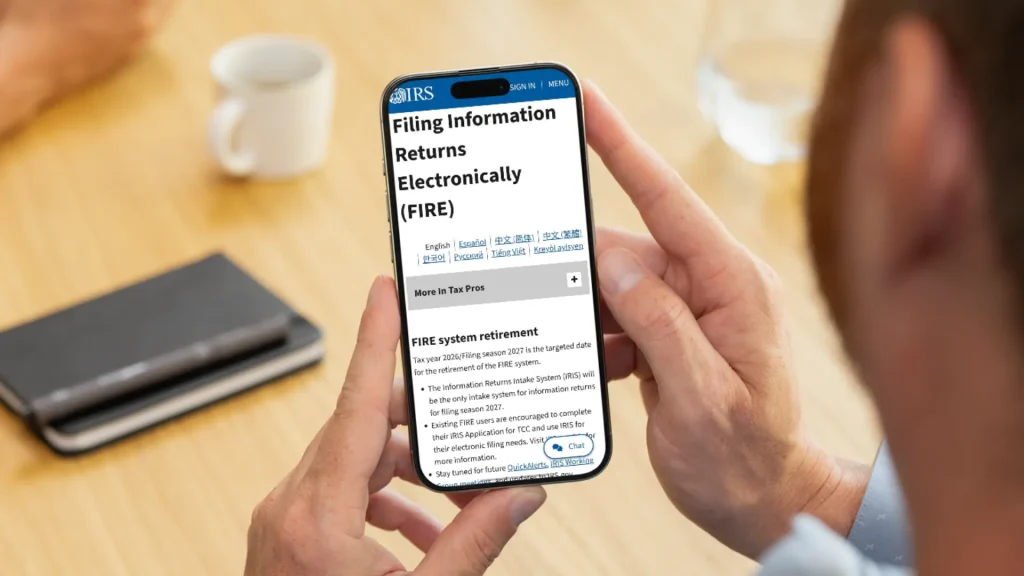
The IRS is retiring the FIRE system ahead of the 2027 filing season. Withholding agents that currently file information returns through FIRE must obtain an IRIS TCC, choose an IRIS filing method, test their filing process and prepare to submit tax year 2026 information returns through IRIS. The transition comes with plenty of questions and concerns. This article aims to relieve some of that anxiety and provide the clarity that you need to move forward with confidence.
What Is the IRS IRIS System?
The Information Returns Intake System (IRIS) is the IRS’s modern replacement for the long-standing FIRE (Filing Information Returns Electronically) system used to submit information returns.
FIRE has supported electronic filing for more than 30 years, but it was built for a very different technological era. As reporting volumes, data validation needs, and automation capabilities have evolved, the IRS has introduced IRIS as a more scalable and modern system for submitting information returns.
Unlike FIRE, which requires filers to upload specially formatted text files, IRIS offers multiple submission options depending on the size and technical capabilities of the filer. Organizations can submit returns through:
- The IRIS web portal, designed for smaller filers submitting a limited number of returns
- Application-to-Application (A2A) transmission, which allows software providers and large filers to submit returns programmatically
- Integrations through approved reporting platforms and tax software providers
One of the most important improvements IRIS introduces is real-time validation.
Under the FIRE system, filers often had to wait hours or even days to learn whether their submission was accepted or rejected. IRIS performs validation checks immediately at the point of submission, identifying formatting errors, missing fields, and other data inconsistencies before the return is accepted.
This shift means clean, accurate data is more important than ever. Errors that once surfaced days later will now appear instantly, making upstream data accuracy critical for organizations submitting information returns.

Why Is FIRE Being Retired?
In short, the FIRE system has reached the end of its lifecycle.
Originally developed in the early 1990s, FIRE was built around legacy file formats and processing models that no longer align with modern reporting requirements. As electronic filing volumes have grown dramatically, the IRS has moved toward a more flexible and scalable infrastructure with IRIS.
IRIS introduces several improvements over the legacy FIRE system, including:
- Real-time data validation
- More modern submission protocols
- Improved scalability to support growing reporting volumes
- A web-based filing interface for smaller filers
Since its launch in 2023, IRIS has already processed millions of information returns, demonstrating the IRS’s long-term commitment to the new platform.
The transition also reflects a broader shift within the IRS toward modernized digital infrastructure, with systems designed to support automation, improved data integrity, and faster processing.
FIRE vs. IRIS: What’s the Difference?
| Feature | FIRE | IRIS |
|---|---|---|
| System name | Filing Information Returns Electronically (FIRE) | Information Returns Intake System (IRIS) |
| Status | The IRS’s legacy information return filing system, being retired | The IRS’s replacement electronic filing system |
| Retirement timeline | Scheduled to be retired December 31, 2026 | Filers need to transition to IRIS for future information return filing |
| TCC requirement | Uses a FIRE Transmitter Control Code (TCC) | Requires an IRIS-specific TCC |
| Filing options | Electronic filing through FIRE | IRIS Taxpayer Portal or Application-to-Application (A2A) |
| Taxpayer Portal | Not available | Designed for smaller-volume filers and provides a web-based filing option |
| A2A filing | Uses the FIRE filing process | Designed for larger filers and organisations using software or automated filing processes |
| Form 1042-S | Filed through FIRE | Moving to IRIS as part of the transition |
| Validation | Legacy FIRE validation process | Provides enhanced validation and feedback during the filing process |
| What filers need to do | Prepare for FIRE’s retirement | Obtain the appropriate IRIS access, determine the right filing method, update processes and prepare for the transition |
What Forms are Affected by the FIRE to IRIS Migration?
Historically, IRIS was used for the Form 1099 series, which includes many of the information returns commonly used by financial institutions, marketplaces, and accounts payable teams.
Examples include:
- Form 1099-MISC
- Form 1099-NEC
- Form 1099-INT
- Form 1099-DIV
- Form 1099-B
- Other forms within the 1099 family
The IRS has expanded IRIS to support additional information returns, including Form 1042-S. Beginning January 1, 2026, filers can use IRIS to e-file 2025 Forms 1042-S due March 15, 2026. During the transition period, certain filings may still be submitted through FIRE, but after December 31, 2026, IRIS will become the required intake system for Forms 1042-S and the broader set of FIRE-related information returns for filing season 2027.
FIRE to IRIS Migration Timeline: Critical Dates You Should Know
As the IRS transitions away from FIRE, organizations should be aware of several key milestones. Before looking at the timeline, there is one practical detail many filers overlook: IRIS requires a separate Transmitter Control Code (TCC).
Your existing FIRE TCC does not carry over to IRIS, and applying for a new TCC through the IRS e-Services system can take up to 45 days to process. This means organizations should begin the application process well in advance of filing deadlines.
Key dates in the transition include:
- Now: Organizations should apply for their IRIS Transmitter Control Code (TCC) through the IRS IR Application for TCC.
- Tax Year 2025 / Filing Season 2026: Both FIRE and IRIS will operate concurrently, giving filers an opportunity to test the new system while continuing to rely on FIRE if necessary.
- December 31, 2026: The FIRE system will be officially retired.
- Filing Season 2027 and Beyond: IRIS will become the primary intake system for electronic Form 1099 and 1042-S submissions.
For many organizations, the concurrent filing period in 2026 represents the ideal opportunity to test IRIS workflows, validate processes, and prepare internal systems ahead of the full transition.
The Bigger Picture
The migration from FIRE to IRIS represents more than just a technology upgrade. It signals a broader shift in how the IRS expects organizations to manage information reporting.
With real-time validation and more structured data requirements, the IRS is raising expectations around data quality, submission accuracy, and filing efficiency. For organizations that rely on manual processes, spreadsheets, or fragmented documentation workflows, these new expectations can introduce operational challenges.
Preparing for IRIS means more than simply applying for a new TCC. It requires confidence that the data flowing into reporting systems — vendor details, account holder information, and tax documentation — is accurate, complete, and validated before submission.
That is exactly where modern compliance platforms play an important role.
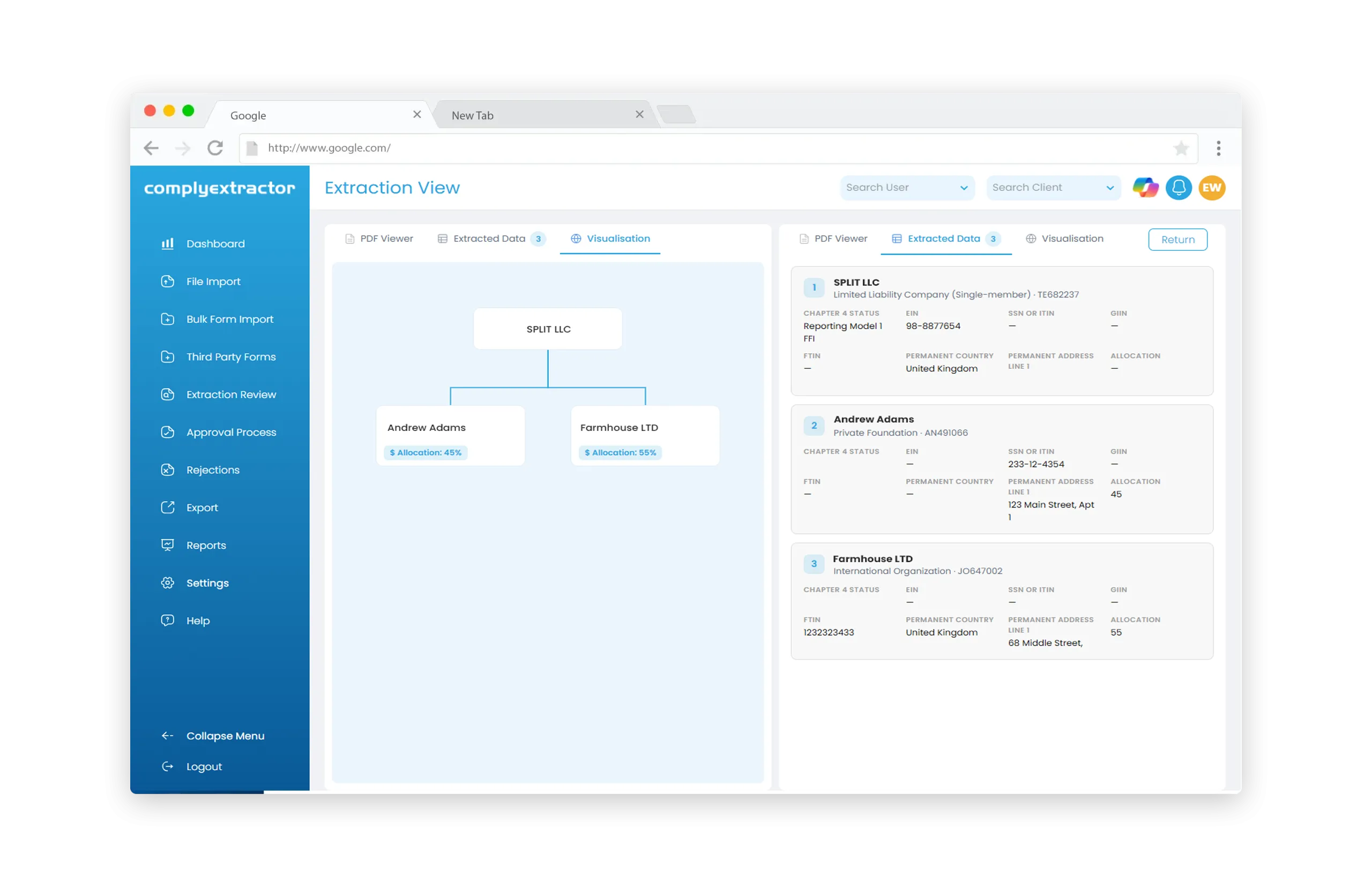
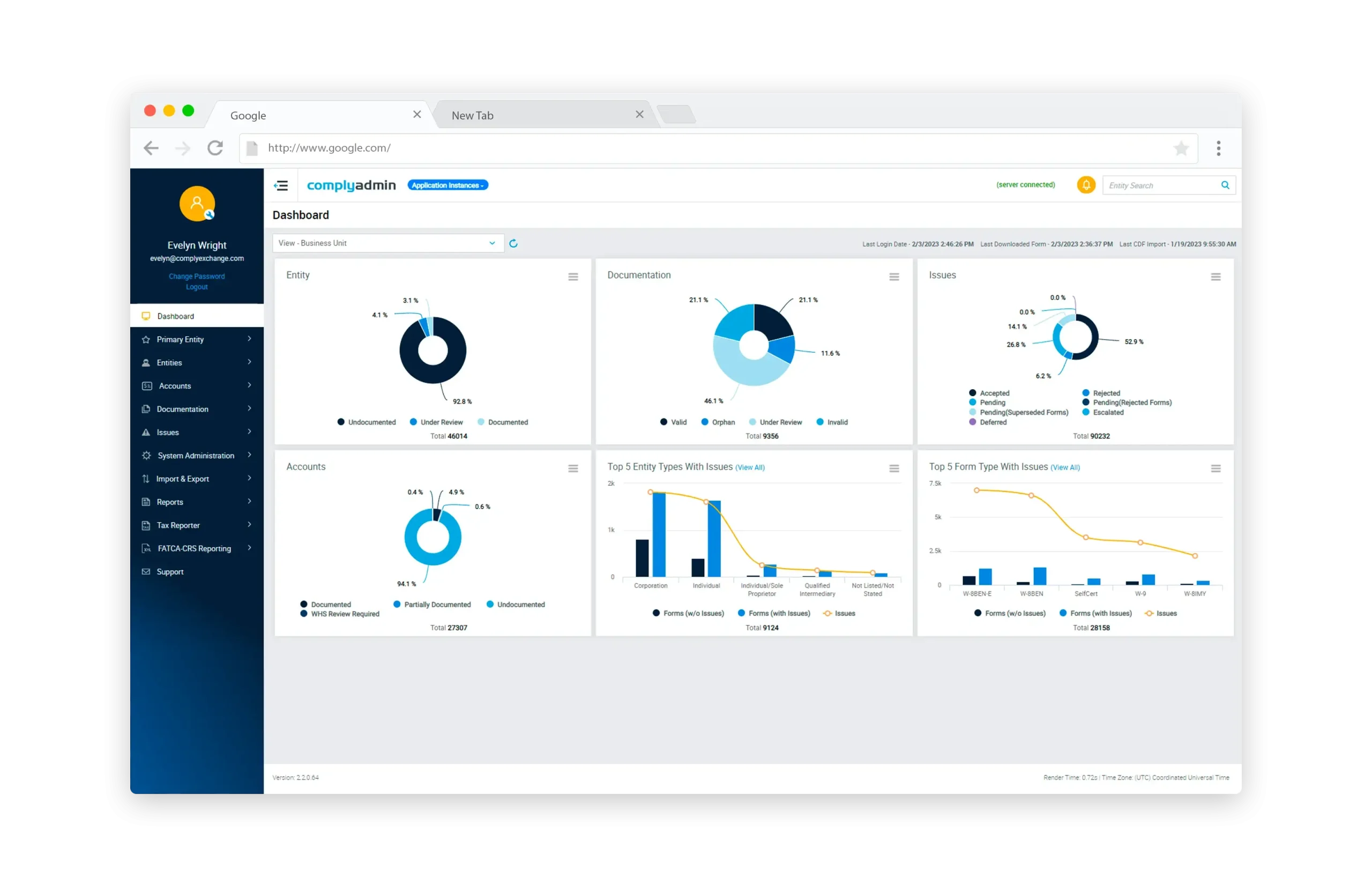
From intelligent IRS form collection with Comply eForms, to centralized documentation management and validation with Comply Admin, to automated withholding statement and document extraction with Comply Extractor, Comply Exchange helps ensure the data flowing into reporting systems like IRIS is clean, complete, and compliant from the start.
Organizations that take steps now to modernize their workflows will be the ones best positioned to navigate the transition smoothly — and avoid the last-minute scramble when FIRE is fully retired.
Publication 5717: https://www.irs.gov/pub/irs-pdf/p5717.pdf
Frequently Asked Questions
The IRS plans to retire the Filing Information Returns Electronically (FIRE) system on December 31, 2026. Withholding agents that currently use FIRE should prepare to transition their information return filing processes to the Information Returns Intake System (IRIS).
Yes. IRIS requires an IRIS-specific Transmitter Control Code (TCC). Withholding agents should make obtaining the appropriate IRIS access part of their migration planning rather than waiting until FIRE is retired.
IRIS offers two main filing options: the IRIS Taxpayer Portal and Application-to-Application (A2A) filing. The Taxpayer Portal provides a web-based option suited to smaller-volume filers, while A2A is designed for organisations and larger filers using software or automated filing processes.