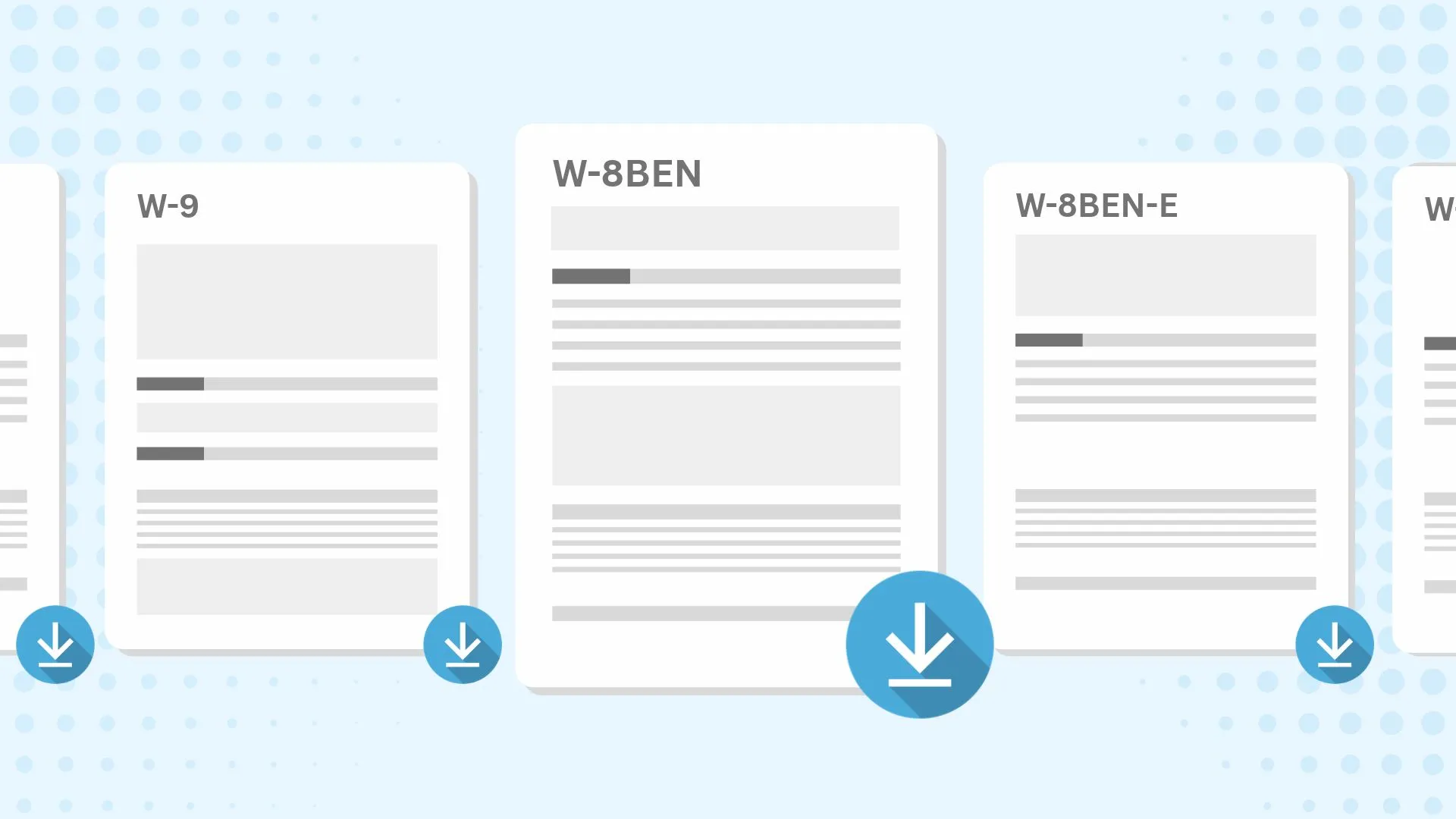
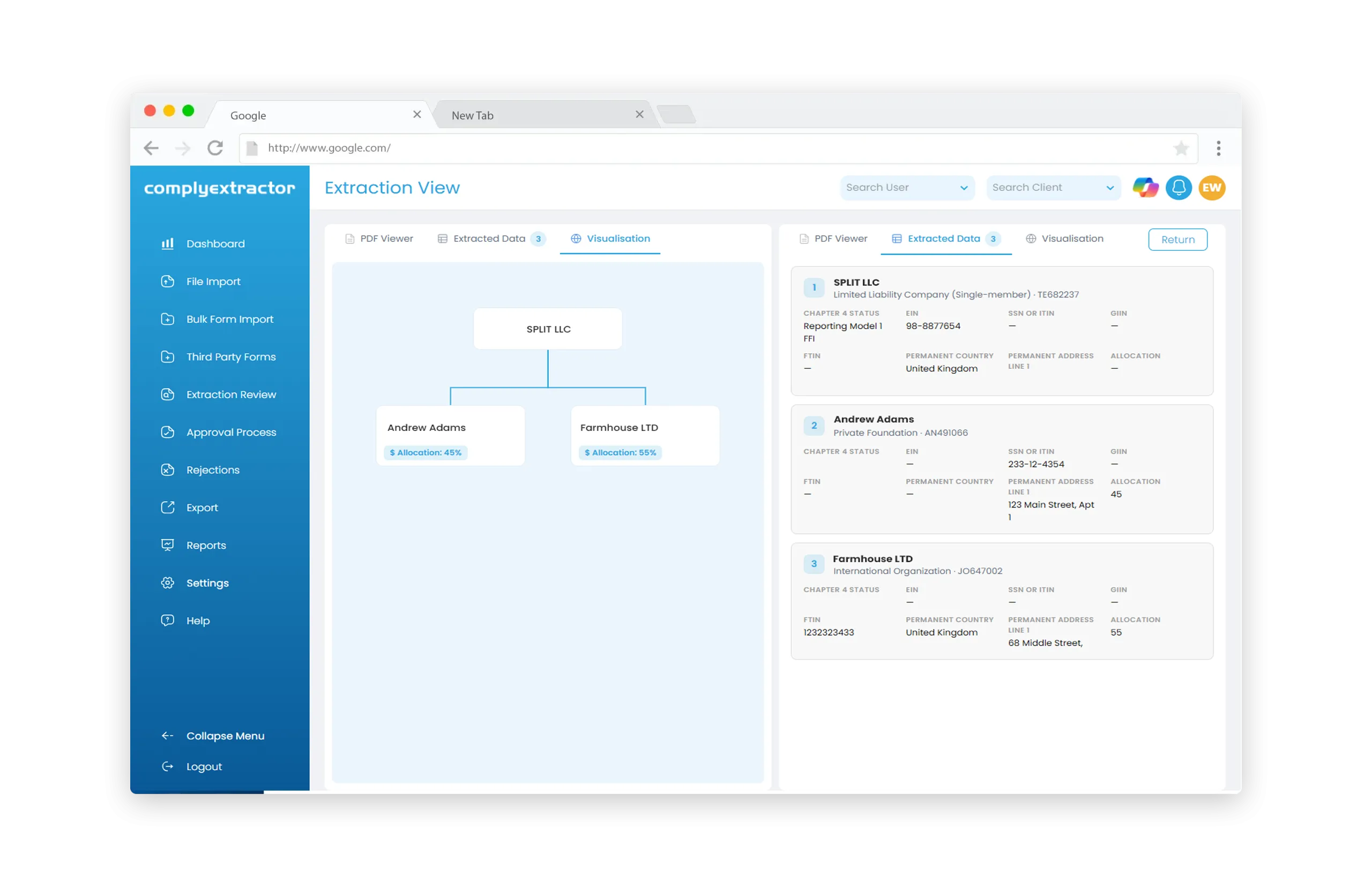
An Affidavit of Unchanged Status is a written certification used alongside certain IRS Forms W-8 to confirm that the information and tax status documented on the form remained accurate and unchanged during a specified prior period. It can help a withholding agent establish the appropriate withholding treatment for earlier payments when permitted under applicable IRS rules, provided there has been no change in circumstances affecting the information or certifications on the Form W-8.
Forms W-8 capture key details about your payee, including their name, tax identification number, permanent residence address, and treaty claim information. This information is essential to U.S. withholding tax and reporting. An affidavit lets you confirm this information is still accurate without asking the payee to complete a brand new form.
Without collecting this information upfront, at the time of onboarding, you risk incorrect withholding and reporting, which can lead to fines and penalties from the IRS. This is exactly where a properly maintained affidavit process helps reduce that risk

What is an affidavit of unchanged status?
An Affidavit of Unchanged Status is a document used to affirm that a taxpayer’s information and status have not changed since the last submission of their W-8 form.
This affidavit helps streamline tax compliance for non-U.S. individuals and entities receiving income from U.S. sources by confirming the continued validity of previously submitted information.

Why Use an Affidavit of Unchanged Status?
The primary purpose of an Affidavit of Unchanged Status is to:
- Confirm that there have been no changes to the information provided on a previously submitted Form W-8.
- Avoid the need for resubmitting a new Form W-8 if the taxpayer’s status and relevant information remain the same.
- Confirm eligibility for treaty benefits under existing tax treaties.
When Is an Affidavit of Unchanged Status Used?
Affidavits of Unchanged Status have legal implications and should be completed accurately and truthfully. Providing false information on these affidavits can lead to severe penalties, including fines and criminal charges.
Before submitting an Affidavit of Unchanged Status, you need to review your tax liability and assess if any changes have occurred since your last submission. If there have been any significant changes, you may need to update your tax forms accordingly.
Consulting with a tax professional or seeking guidance from the IRS can help ensure that you understand the legal implications and requirements associated with Affidavits of Unchanged Status.
Is There A Standard Format?
No, an affidavit of unchanged status is a non-standardized document, though each format will typically request the same information.
What Information Is Requested On An Affidavit Of Unchanged Status?
- Print name (as shown on Line 1 of the Form W-8)
- A penalties of perjury statement, declaring that the payee has reviewed the information on the Form W-8 (if this is not attached as part of a Form W-8) and certifies that the information is accurate and valid as of the signature date, but also remained the same and unchanged for the time period in question before the signature date (Note: you can insert a particular date/time period)
- Signature of the same person who signed and certified the Form W-8
- Date

Common Mistakes to Avoid with Form W-8 Affidavits
When completing Form W-8 Affidavits of Unchanged Status, it is important to avoid common mistakes that could lead to compliance issues or delays. Here are some common mistakes to avoid:
- Failing to provide accurate and up-to-date information: Ensure that all information provided on the forms is accurate and reflects your current tax situation.
- Providing false information: Be truthful and accurate when completing the forms. Providing false information can have serious legal consequences.
- Forgetting to sign and date the forms: Always remember to sign and date the forms to certify their accuracy.
- Failing to submit the forms on time: Pay attention to submission deadlines and make sure to submit the forms within the specified timeframe.
Practical Use Case
Imagine a foreign individual, John Doe, who previously submitted a W-8BEN form to a U.S. financial institution to certify his foreign status and claim benefits under a tax treaty. A year later, the financial institution requires confirmation that John’s status has not changed.
Instead of completing a new W-8BEN form, John can submit an affidavit of unchanged status, confirming that all the information on his original W-8BEN form is still accurate. This affidavit is then used by the financial institution to maintain proper tax withholding and reporting in compliance with IRS requirements.
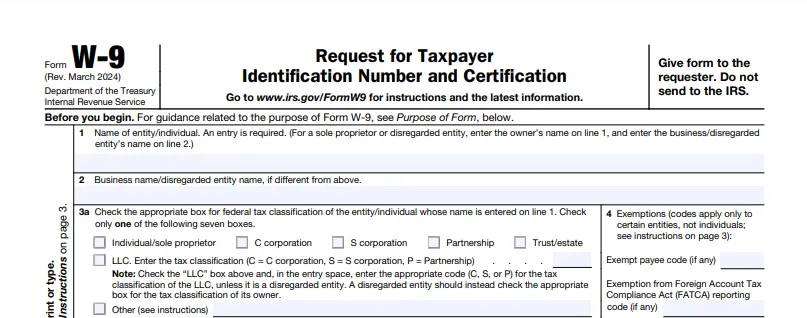
Can You Use an Affidavit With Form W-9?
No, at this time, an affidavit of unchanged status cannot be used with Form W-9.
What is a retroactive statement?
Affidavits and retroactive statements are both essential for accurate U.S. information reporting but serve different purposes. As we’ve discovered, Affidavits of Unchanged Status confirm that the information on previously submitted forms, like Form W-8, remains unchanged, helping to maintain current compliance without frequent updates.
In contrast, retroactive statements correct past inaccuracies, addressing errors in previously reported data related to tax withholding and reporting. Retroactive statements focus on historical corrections with detailed explanations of the changes.
Similar to Affidavits there is no standard format for submitting a retroactive statement.
Conclusion
An Affidavit of Unchanged Status is a valuable tool in the administration of IRS Forms W-8, allowing non-U.S. individuals and entities to certify that their tax-related information remains unchanged. This document simplifies compliance processes, ensuring that both taxpayers and withholding agents maintain accurate and up-to-date records with minimal administrative burden.
Understanding the purpose and proper use of these affidavits can enhance the efficiency of tax documentation and compliance.
Through Comply’s application, you can seamlessly and electronically collect IRS Forms W-8 with retroactive statements, while automatically validating and tracking for form expiration.
Make sure to follow Comply Exchange for more industry updates and to the Comply Connect for a full industry round-up at the end of each month!
Article Updated: October 2026
Frequently asked questions
Generally, a Form W-8 is valid from the date it is signed until the last day of the third succeeding calendar year, unless a change in circumstances makes information on the form incorrect. Certain Forms W-8 may remain valid indefinitely under specific conditions, so withholding agents should consider the rules applicable to the particular form and circumstances.
An Affidavit of Unchanged Status is intended to certify that relevant information and status remained unchanged during the specified period. If a change in circumstances makes information on an existing Form W-8 unreliable or incorrect, the withholding agent may need to obtain a new Form W-8 or other appropriate documentation.
The IRS does not provide a standard form titled “Affidavit of Unchanged Status.” In practice, withholding agents or financial institutions may use their own certification formats to document unchanged status for an applicable prior period. The certification should accurately identify the relevant Form W-8 and period and contain the information required for the circumstances.