In the overly complex world of tax compliance, timing isn’t just anything – it’s everything. One critical, yet often overlooked, element of that timing is the sunset period. If your team collects Forms W-8 and W-9, you’ve likely noticed the revision date listed near the top. That small detail carries major compliance implications: it tells you whether you’re using the latest IRS-approved version of the form.
But when the IRS releases a new form revision, you’re not expected to switch overnight. The IRS provides a window of time, called a sunset period, to allow organizations to transition from the old version to the new one. This period is especially important for organizations using technology platforms, where rolling out a new form can take time due to dependencies like validations, translations, and integrations.
When managing IRS forms and navigating global tax regulations, understanding how sunset periods apply to your tax form collection and validation obligations is essential. In this blog, we break down what sunset periods are, why they matter, and how you can stay ahead of them to keep your compliance operations airtight.
What Is a Sunset Period When It Comes to IRS Forms?
A sunset period in tax compliance is a set timeframe tied to a regulation, form, or reporting requirement. After this period A “sunset period” typically signifies a phase-out or discontinuation period for older versions of tax forms or specific tax provisions. When the IRS releases a new form version or amends tax laws, a transitional period is often provided, unless otherwise noted, during which taxpayers can continue using the old form or adhering to the previous regulations before fully transitioning to the new requirements. Awareness of sunset periods is crucial to ensure compliance with the latest tax regulations.
For the Form W-9, the IRS is silent on whether the sunset period applies. Generally, the sunset period would apply similar to that of the Forms W-8, where it is outright stated that you may accept the prior version of the tax form until the later of 6 months after the revision date that is shown on the form or the end of the calendar year that the updated form is issued, unless the IRS specifically issues guidance that would affect the period for accepting the prior form version.
The sunset period allows for time to transition, especially for technology companies, where getting new form revisions available can take time. If the changes made to the form are significant to your organization, then as a best practice it would be advantageous to incorporate the new revision as soon as possible.
Why Sunset Periods Matter
Failing to monitor and act within these periods can result in incorrect and invalid tax forms, subjecting an organization to penalties and interest, and increased scrutiny during audits. That’s why understanding and tracking sunset periods is critical to any robust tax compliance program.
And as tax regimes around the world continue to evolve (hello DAC8, CARF, and new IRS updates), understanding these transition periods is essential to maintaining compliance across your vendor, partner, and customer networks. In short, the end of a sunset period marks a key point of transition. Organizations that don’t adapt in time risk falling out of compliance.
How to Avoid Penalties and Noncompliance
SStaying compliant with evolving tax forms and regulations takes more than knowing when forms expire. It requires a proactive approach to tracking and managing form expiration, on top of applicable sunset periods, as well as a plan to transition in place.
Here are some best practices to help you stay ahead:
- Centralize Tax Form Management: Maintain a centralized repository of all tax forms and their expiration dates to ensure you always know what’s valid and what needs updating.
- Automate Reminders and Renewals: Set up automated alerts well in advance of expiration periods and deadlines to ensure timely outreach and form re-collection.
- Monitor Regulatory Updates: Stay informed of regulatory changes that may introduce new sunset periods or alter existing timelines.
How Comply Exchange Can Help
Comply Exchange simplifies the chaos.
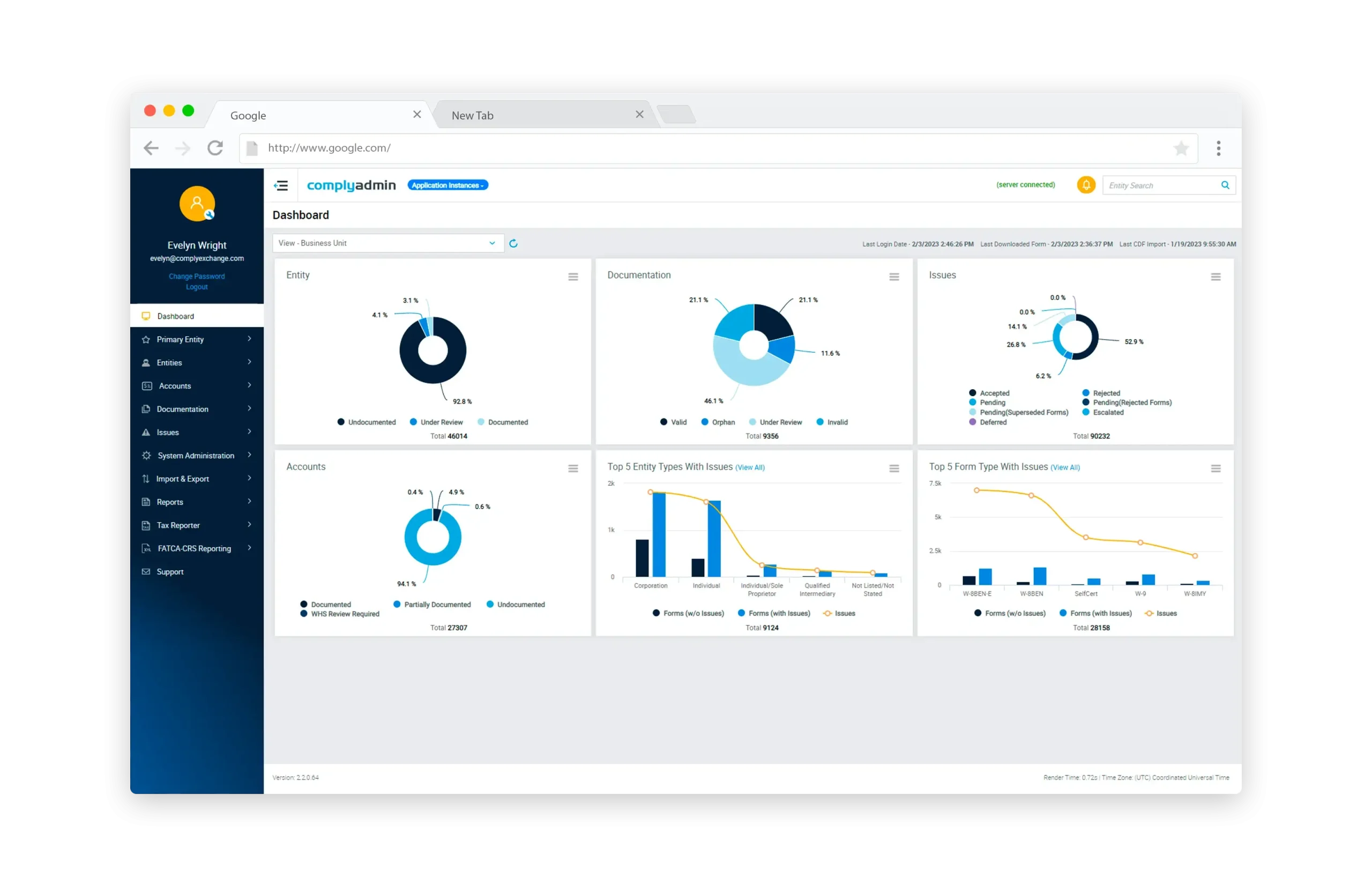
Comply Admin gives compliance teams full visibility and control over tax form validity. Its dashboards actively track expirations and send automated alerts, ensuring no expiration goes unnoticed.
Meanwhile, our eForms Solution simplifies the form collection process by guiding users through accurate, real-time form completion and validation. Built-in logic and renewal workflows help replace expired or outdated forms quickly. This keeps your organization compliant and ready for upcoming form changes, and the challenges that go along with them.
With the right partner and tools, your team can stay agile, compliant, and fully prepared for whatever the IRS releases next.
Simplify. Collect. Comply.