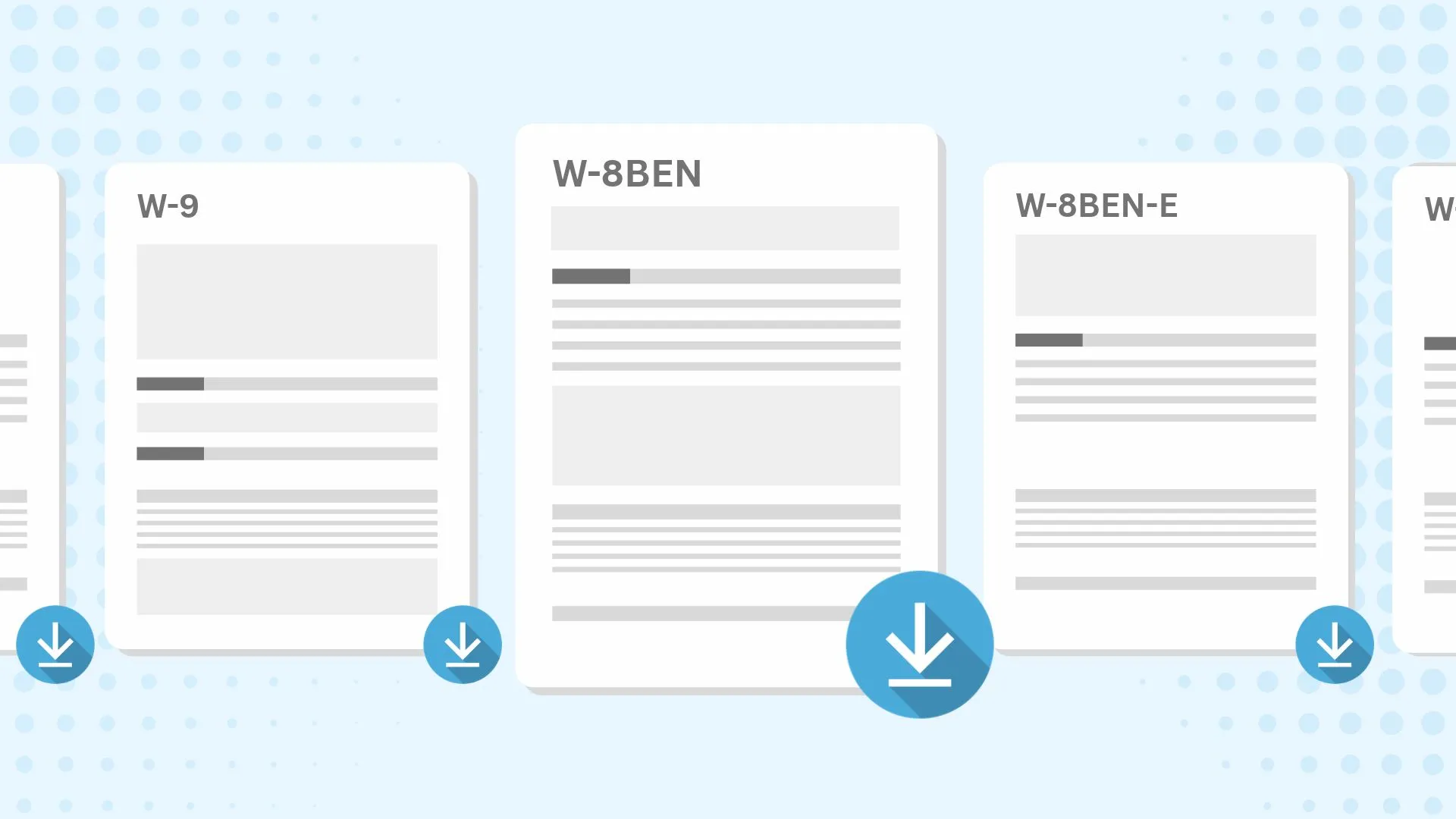
Browse key FATCA terms and definitions to better understand the terminology used across FATCA compliance, reporting and tax documentation. Each term is explained in clear, practical language, covering important concepts relating to foreign financial institutions, withholding, account holders and FATCA reporting requirements.
FATCA
FATCA (Foreign Account Tax Compliance Act) A U.S. law that requires certain foreign financial institutions and other entities to identify and report information about U.S. account holders to the IRS, helping prevent offshore tax evasion.
Foreign Financial Institution
A foreign financial institution (“FFI”) is a financial institution organized outside of the United States. Under Chapter 4, a financial institution is a depository institution, broker, custodial institution, investment fund, or insurance company that issues annuities or certain cash value insurance contracts. It would not include property and casualty insurance.
Account Holder
The person or entity listed or identified as the holder or owner of a financial account by the financial institution that maintains it, subject to exceptions, for example, where an account is held by an agent, nominee or intermediary on behalf of another person, that other person is treated as the account holder.
Recalcitrant Person
An account holder that fails to provide the documentation or information a participating FFI or withholding agent requests to determine their FATCA status. Certain payments to recalcitrant account holders may be subject to 30% FATCA withholding.
Specified U.S. Person
A U.S. person other than those excluded under FATCA, such as publicly traded corporations and their affiliates, banks, REITs, regulated investment companies, tax-exempt organizations and government entities. Specified U.S. persons are the account holders a foreign financial institution must identify and report under FATCA.
Substantial Ownership Interest
A person with more than 10% of interest in the foreign entity (directly or indirectly). From a FATCA perspective, the analysis is looking for a Specified U.S. person with more than 10% of interest in the foreign entity (directly or indirectly) defined as a Substantial U.S. owner.
Chapter 4
A section of the U.S. Internal Revenue Code that establishes FATCA withholding and reporting requirements for certain foreign financial institutions and other foreign entities receiving U.S.-source payments. Chapter 4.
Intergovernmental Agreement
An agreement between the United States and another jurisdiction that establishes how financial institutions in that jurisdiction comply with FATCA reporting and information-exchange requirements.
Model 1 Agreement
A FATCA intergovernmental agreement (IGA) under which financial institutions in a partner jurisdiction report information on U.S. account holders to their local tax authority, which then exchanges the information with the IRS.
Model 2 Agreement
A FATCA intergovernmental agreement (IGA) under which financial institutions in a partner jurisdiction report information directly to the IRS, with the local tax authority providing support through information exchange and other cooperation.
U.S. Person
For U.S. tax purposes, generally an individual who is a U.S. citizen or U.S. resident, or an entity such as a corporation, partnership, trust, or estate created or organized under U.S. law. The classification can affect tax withholding and reporting requirements.