How to Determine Withholding Rates
The correct U.S. withholding tax rate depends on the payee's tax status, the type and source of income, valid tax documentation, applicable Internal Revenue Code provisions, and whether a U.S. tax treaty provides a reduced rate or exemption. For certain U.S.-source payments to foreign persons, the statutory Chapter 3 withholding rate is generally 30%, although a valid treaty claim or Internal Revenue Code (IRC) exemption may reduce or eliminate withholding.
How do you determine the correct withholding rate?
Determining the correct withholding rate requires evaluating the payee’s tax documentation, applicable regulatory rules, and any available treaty claims or Internal Revenue Code (IRC) exemptions.
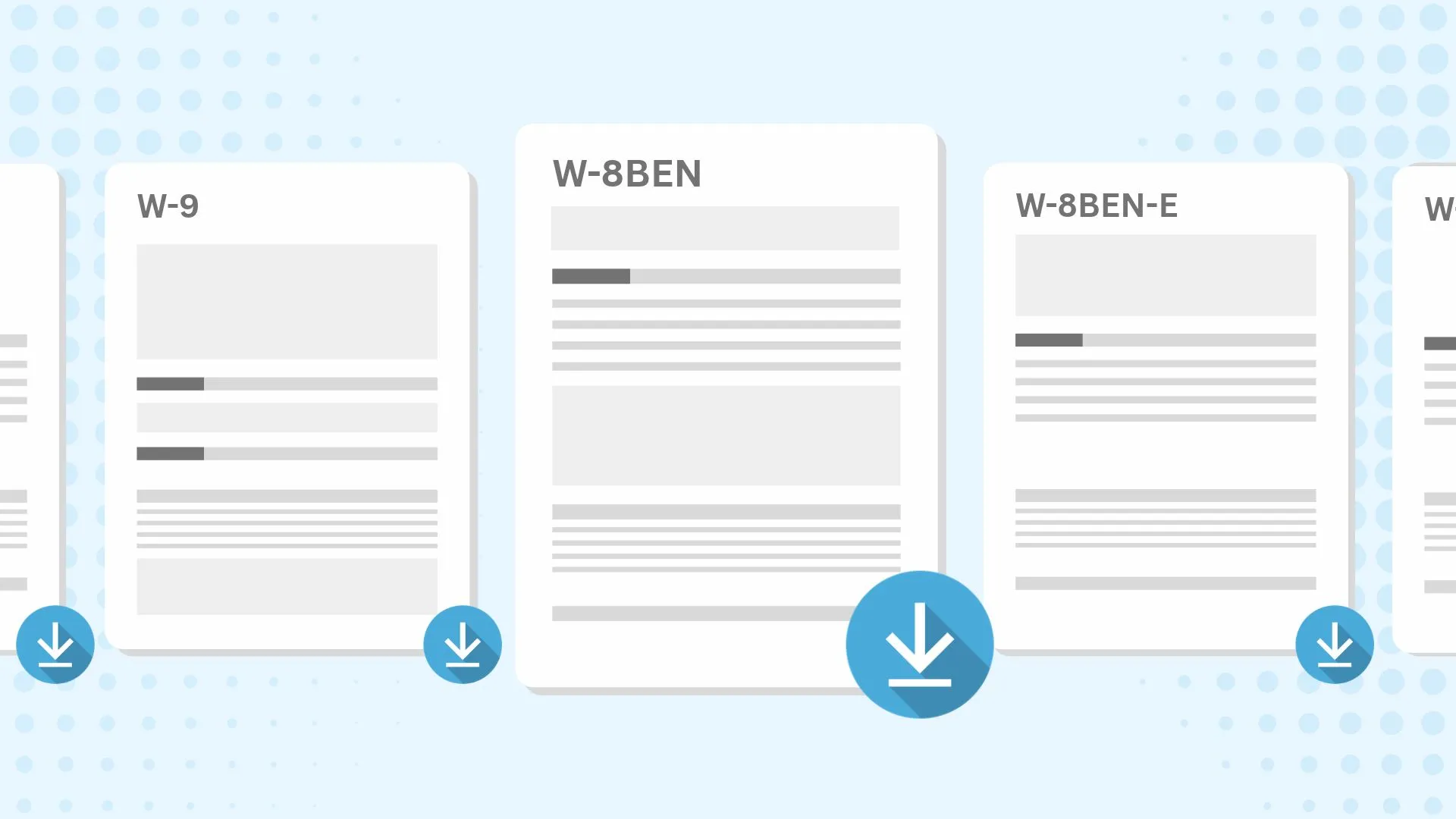
For foreign payees, the payer should first determine whether the payee has claimed a reduced rate of withholding on Form W-8. If no reduced rate has been claimed, withholding may apply at the standard 30% rate. If a reduced rate is claimed under an applicable U.S. income tax treaty, the payer must verify that the claim is valid and supported by the required documentation.
For example, if required information such as a U.S. or foreign Taxpayer Identification Number (TIN) is missing, the payee may not qualify for the reduced treaty rate. In that case, withholding may need to be applied at the maximum applicable rate.
When is backup withholding required?
Backup withholding may apply to certain payments made to U.S. persons. This can occur when the payee has not provided a valid TIN on Form W-9 or when the payer receives a B Notice indicating that backup withholding is required.
Determining whether backup withholding applies is part of a broader withholding and reporting process. Payers need a consistent process for evaluating documentation, treaty claims, IRC exemptions, TIN requirements, and applicable withholding rules so that payments are withheld and subsequently reported correctly.
Follow us and never miss an update
Transcript
Determining the correct withholding rate is not a single-step decision. It requires interpreting documentation, regulatory rules. Treaty claims can reduce withholding, but only if proper documentation is in place and maintained.
Sometimes IRC or internal revenue code exemptions may apply. A strong process ensures that all three of these components are evaluated consistently, not manually, not reactively, but through controlled and repeatable logic. So, you must look at whether the customer, the payee, if they’ve accurately claimed a reduced rate of withholding on their Form W-8.
If they did not claim a reduced rate of withholding, you may deem to withhold at 30%. If they made a claim, but the claim itself is not valid, so for example, maybe they did not provide a U.S. or a foreign TIN, then the reduced rate of withholding should not be given and you need to withhold at the maximum rate. It’s important in light of that to be aware of the countries with which the U.S. has an income tax treaty.
From there, you also have to consider whether any backup withholding is required. It may be required on payments to U.S. persons who are receiving certain payment types where they have not provided a valid TIN on a W-9 or where the payer has actually been notified or received a B notice indicating that backup withholding is required. It’s important to remember you’re not done after this step. This is actually all leading up to you being able to appropriately withhold and then appropriately report.
What is the standard withholding rate for foreign payees?
The standard withholding rate may be 30% if a foreign payee has not claimed a valid reduced rate of withholding. A reduced rate may be available under an applicable U.S. income tax treaty, provided the payee meets the requirements and supplies the necessary documentation.
What documentation is required to claim a reduced withholding rate?
A foreign payee generally needs to make a valid claim for a reduced withholding rate on the appropriate Form W-8. Depending on the claim, required information may include a U.S. or foreign Taxpayer Identification Number (TIN). If the documentation is incomplete or the claim is invalid, the reduced rate may not apply.
When does backup withholding apply?
Backup withholding may apply to certain payments made to U.S. persons when the payee has not provided a valid TIN on Form W-9. It may also be required when the payer receives a B Notice indicating that backup withholding should be applied.
Share with your community
Validating Tax Forms | U.S. TIN, GIIN and FTIN
Learn why validating TINs, GIINs and FTINs is essential for tax compliance. Discover how proper validation prevents backup withholding.
Watch Now