IRS Forms W-8 and W-9 Common Errors
IRS Forms W-8 and W-9 most often fail for three reasons: the wrong form type or revision is collected, manual tracking processes don’t scale, and forms expire or become outdated without anyone noticing. Collecting a form doesn’t mean it’s valid, so organizations need consistent validation, centralized records and a process for tracking W-8 expiration dates before they cause withholding issues.
IRS Form W-9: A Quick Refresher
Use Form W-9, Request for Taxpayer Identification Number and Certification, when you need to request the Taxpayer Identification Number (TIN) of a U.S. person. If you, as a Form W-9 requester, must file an information return with the IRS, you need to obtain the correct TIN to report the amount paid to the individual or any other reportable amount, which may involve backup withholding.
Who must fill out a Form W-9?
IRS Forms W-8: A quick refresher
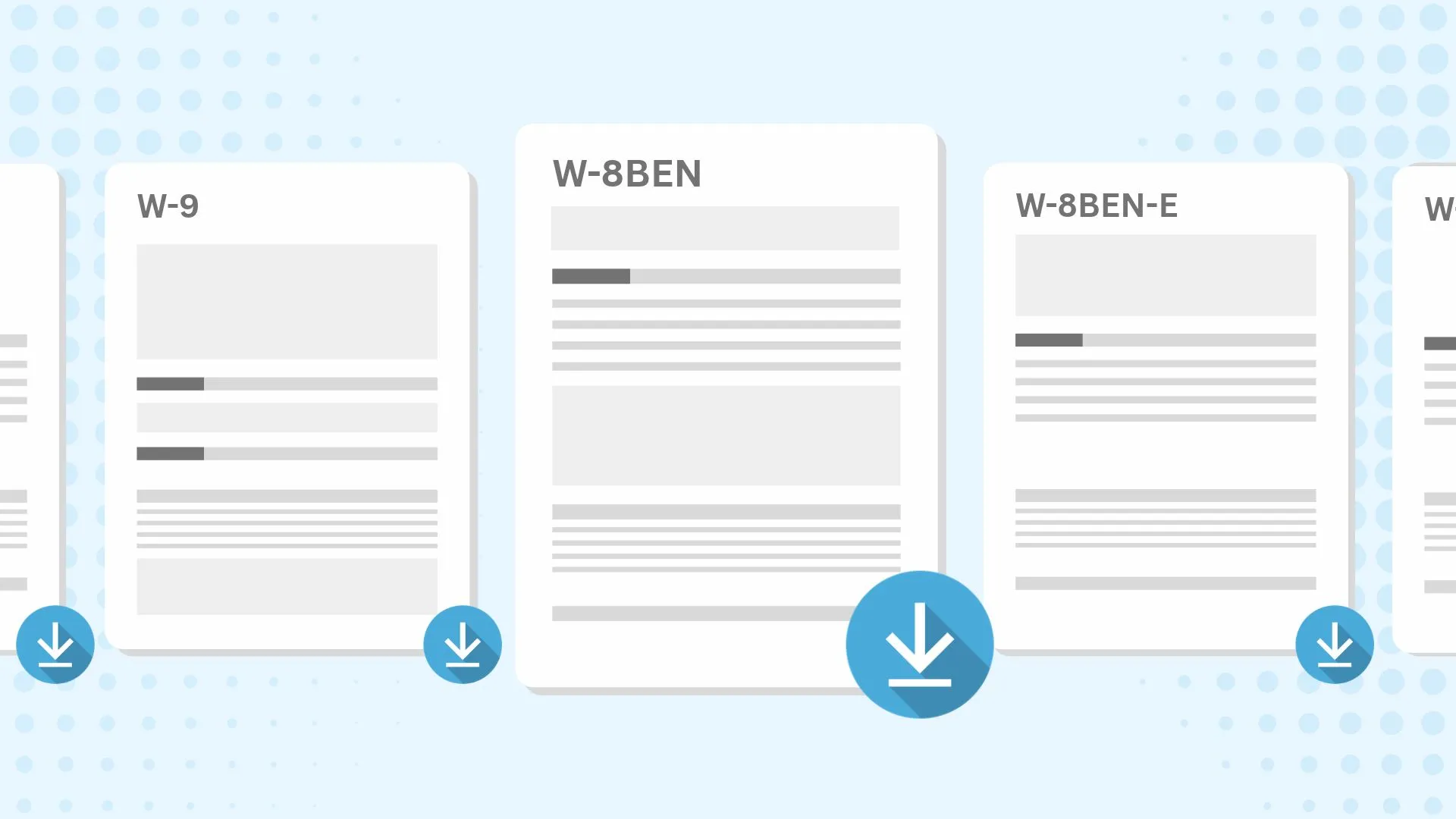
The W-8 series includes multiple forms, each designed for a specific type of account holder or tax situation. This variety ensures that different entities, whether individuals, organizations, or intermediaries—provide the correct tax information. For example, Form W-8BEN is used by foreign individuals, while W-8BEN-E applies to entities. Foreign tax-exempt organizations use Form W-8EXP, and Form W-8ECI is for effectively connected income. Intermediaries and flow-through entities rely on Form W-8IMY, which often includes supporting documentation like withholding statements. There’s even the sometimes-overlooked Form 8233 for service exemptions. Each form serves a precise purpose, reflecting the diverse scenarios that can arise for non-U.S. persons and entities receiving U.S. income.
Follow us and never miss an update
Transcript
As tax regulations evolve, particularly in light of digital asset regulations both in the U.S. and globally, the industry is dealing with more complexity, more scrutiny, and overall less room for error. Think of tax documentation as your compliance foundation. If the foundation is weak, everything cracks under the pressure.
Now, a key point to emphasize here is that tax documentation is not a one-time requirement. When it’s thought of as one, we see a lot of risk and a lot of points of failure. To highlight that, here are three big W-8/W-9 failure points that we often see.
The first: we collected a form, but that does not mean we collected a valid form. A PDF in a folder doesn’t mean you’re covered. In practice, forms fail because of things like the wrong form type, or the wrong form revision being used. Fields are missing, or data is incorrect.
The second: manual processes don’t scale. A spreadsheet tracker might work for 200 customers, but when you start reaching higher volumes, it turns into things like inconsistent review standards due to a lack of centralization across the organization, no audit trail, bad security practices, and constant fire drills to clean data before reporting deadlines, which I’m sure a lot of folks are dealing with right now.
The third: expiration and changes in circumstance. This is a huge one for W-8s, and still important for W-9s, but to emphasize W-8s here: even if the form is valid today, you need a process in place that can track when tax forms expire. We know that Forms W-8 have a genuine end of life. Trigger solicitations ahead of expiration, because once that tax form expires, it can trigger a withholdable event that maybe you weren’t prepared to withhold for. You end up with a compliant onboarding process that becomes not so compliant, and costly, over time.
What are the most common errors on Forms W-8 and W-9?
Common errors include collecting the wrong form type or revision, missing required fields, and collecting incorrect data. Simply having a completed form does not mean it is valid, which is why proper validation is an important part of the tax documentation process.
Why can manual W-8 and W-9 processes create compliance risks?
Manual processes can become difficult to manage as the volume of tax forms increases. The video highlights risks including inconsistent review standards, a lack of centralization, missing audit trails, poor security practices, and last-minute data clean-up before reporting deadlines.
Why is it important to track W-8 form expiration?
W-8 documentation has an end of life, so organizations need a process for tracking expiration and requesting updated documentation in advance. The video explains that allowing a tax form to expire can create withholding issues and turn a compliant onboarding process into a compliance risk over time.
Share with your community
Validating Tax Forms | U.S. TIN, GIIN and FTIN
Learn why validating TINs, GIINs and FTINs is essential for tax compliance. Discover how proper validation prevents backup withholding.
Watch Now