What is a Withholding Statement?
A withholding statement provides information that enables a withholding agent to determine how a payment should be allocated and the appropriate U.S. tax withholding and reporting treatment. Commonly associated with IRS Form W-8IMY, withholding statements may allocate payments by income type to individual payees, withholding rate pools or other permitted pools of payees, depending on the intermediary or flow-through entity and the applicable withholding requirements.
No Industry Standard Template
Despite its importance, there is no universal standard for how withholding statements are structured or delivered. As a result, organizations receive these documents in a wide variety of formats, ranging from highly structured spreadsheets to unstructured PDFs. This inconsistency creates operational challenges, as tax and compliance teams must interpret and process the same types of data presented in different ways. The lack of standardization increases the risk of errors, delays, and inefficiencies in day-to-day workflows.
What is on a Withholding Statement?
Typically, a withholding statement includes key details such as the name, address, and taxpayer identification number (TIN) of each beneficial owner. It may also outline the income type, allocation percentages, and applicable withholding rates. While the underlying data is consistent in purpose, the format variability makes it difficult to automate processing without advanced tools or manual intervention.
Ultimately, withholding statements play a vital role in ensuring transparency and accuracy in cross-border payments and tax reporting. However, their inconsistent formatting highlights a broader industry challenge—one that calls for improved standardization or smarter automation solutions to streamline data extraction, validation, and reporting.
To learn more about how Comply Extractor can simplify withholding statement processing through intelligent data extraction and automation, get in touch with our team today.
Follow us and never miss an update
Transcript
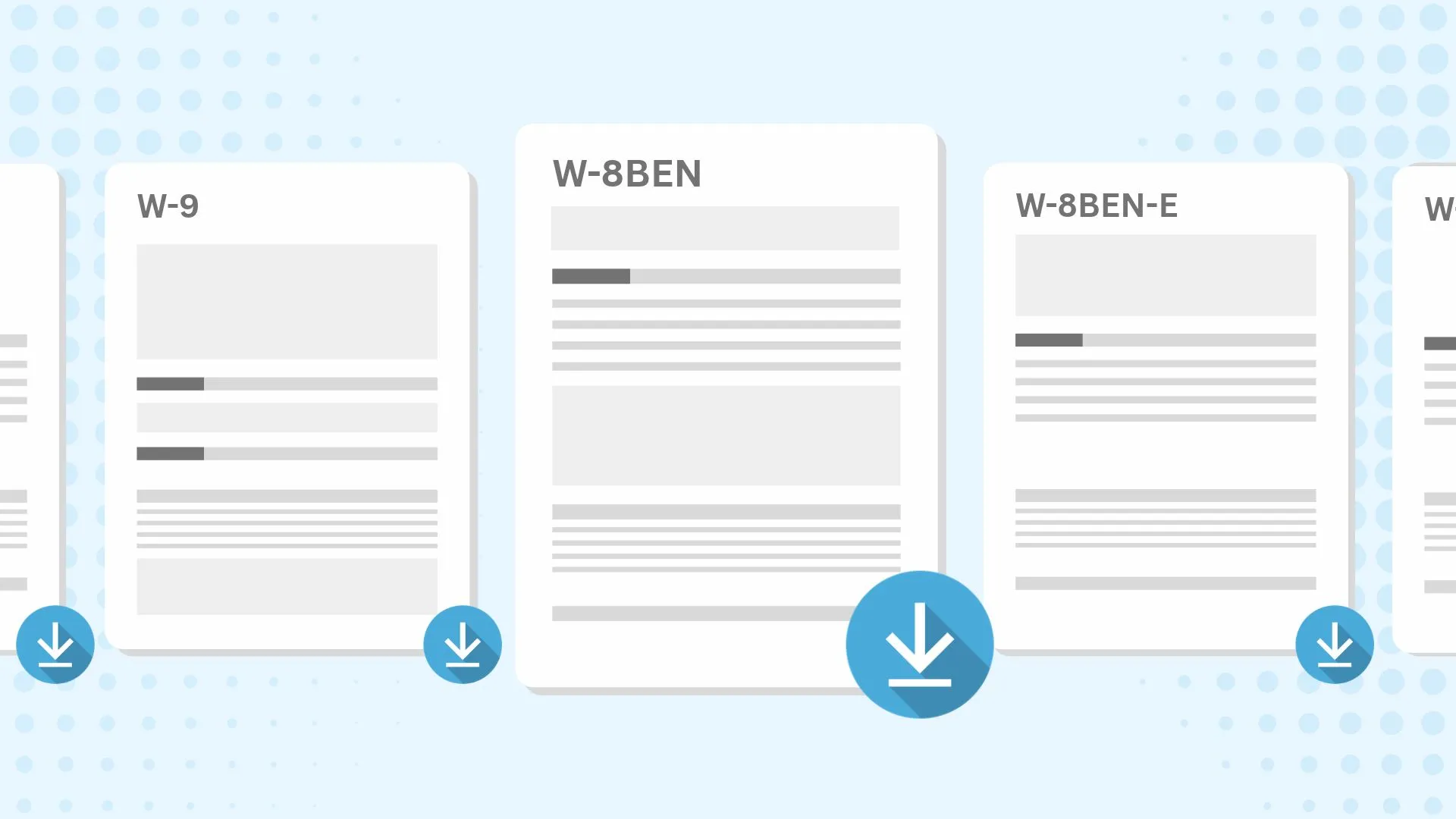
One of the mysteries of tax compliance has always been the withholding statement. Despite being common practice today, these documents can come in all shapes and sizes, halting you in your day-to-day activities. So, you might be wondering, what exactly is a withholding statement? A withholding statement is an essential document that often accompanies Forms W-8IMY. A withholding statement details the underlying beneficial owners of the income and the corresponding information regarding the allocation of the payment. This statement ensures that the correct withholding rates apply to the income distributed.
Despite this sounding straightforward, there’s never been an industry standard for how the information is provided. This has resulted in a myriad of different formats from many different entities and corporations. Which is odd as they tend to all present the same information. What information is on a withholding statement? Payee information, the name, address, and taxpayer identification number of each beneficial owner receiving the income, as well as their status as a U.S. or foreign person, and the type of recipient. Income details, a breakdown of the types of income distributed, such as dividends, interest, royalties, or other payments. Withholding rates, the applicable withholding tax rate for each type of income. This is based on the recipient’s country of residence and any relevant tax treaties. Allocation of income, details on how the income is allocated among the different beneficial owners or account holders.
Documentation references, references to the W-8IMY Forms or other documentation, for example, documentary evidence, Form W-8 or Form W-9, that support the withholding rates and allocations. There you have it, a quick explanation of what a withholding statement is and what information is provided on it. Withholding statements, while crucial for tax compliance come with several challenges that can complicate the overall management and accuracy.
High error rates, time-consuming manual processes, and a lack of standardization may leave you fighting an uphill climb. But don’t stress. Thanks to advancements in modern technology and AI, Comply Exchange has developed a solution, the Comply Extractor. This tool simplifies the process by extracting all the necessary data from withholding statements and accompanying documentation, compiling it into easy-to-use Excel or XML files, making that upward climb feel more like a day at the beach. For more information on the Comply Extractor and our other tax compliance products, check the description below or visit complyexchange.com to schedule a demo today.
Thanks for watching.
Does Form W-8IMY always require a withholding statement?
No. Whether a withholding statement is required depends on the entity’s status, the type of payment and the applicable U.S. withholding and reporting requirements. When required, the withholding statement provides information needed to allocate payments and determine the appropriate withholding treatment.
What is a withholding rate pool?
A withholding rate pool groups payees or account holders according to their applicable withholding treatment where IRS rules permit payments to be allocated on a pooled basis. Withholding rate pools are commonly used in withholding statements provided by certain intermediaries.
When should a withholding statement be updated?
A withholding statement should be updated when necessary to ensure the withholding agent has accurate information to apply the appropriate withholding rate and meet its reporting obligations. Changes to payees, allocations, documentation or withholding status may require the withholding statement to be updated.
Share with your community
Validating Tax Forms | U.S. TIN, GIIN and FTIN
Learn why validating TINs, GIINs and FTINs is essential for tax compliance. Discover how proper validation prevents backup withholding.
Watch Now